Sunday, April 19, 2015

Traceability beyond the ear tag.

As I’ve been travelling this past year I have been astonished by the level of traceability in the  processing plants abroad.  I was welcomed into two plants, on two different continents, with open arms and fantastic hospitality with the only request being I leave my camera outside.   Geographically these two business couldn’t be further apart but their similarities caught me off guard, their traceability processes are fundamentally similar.    

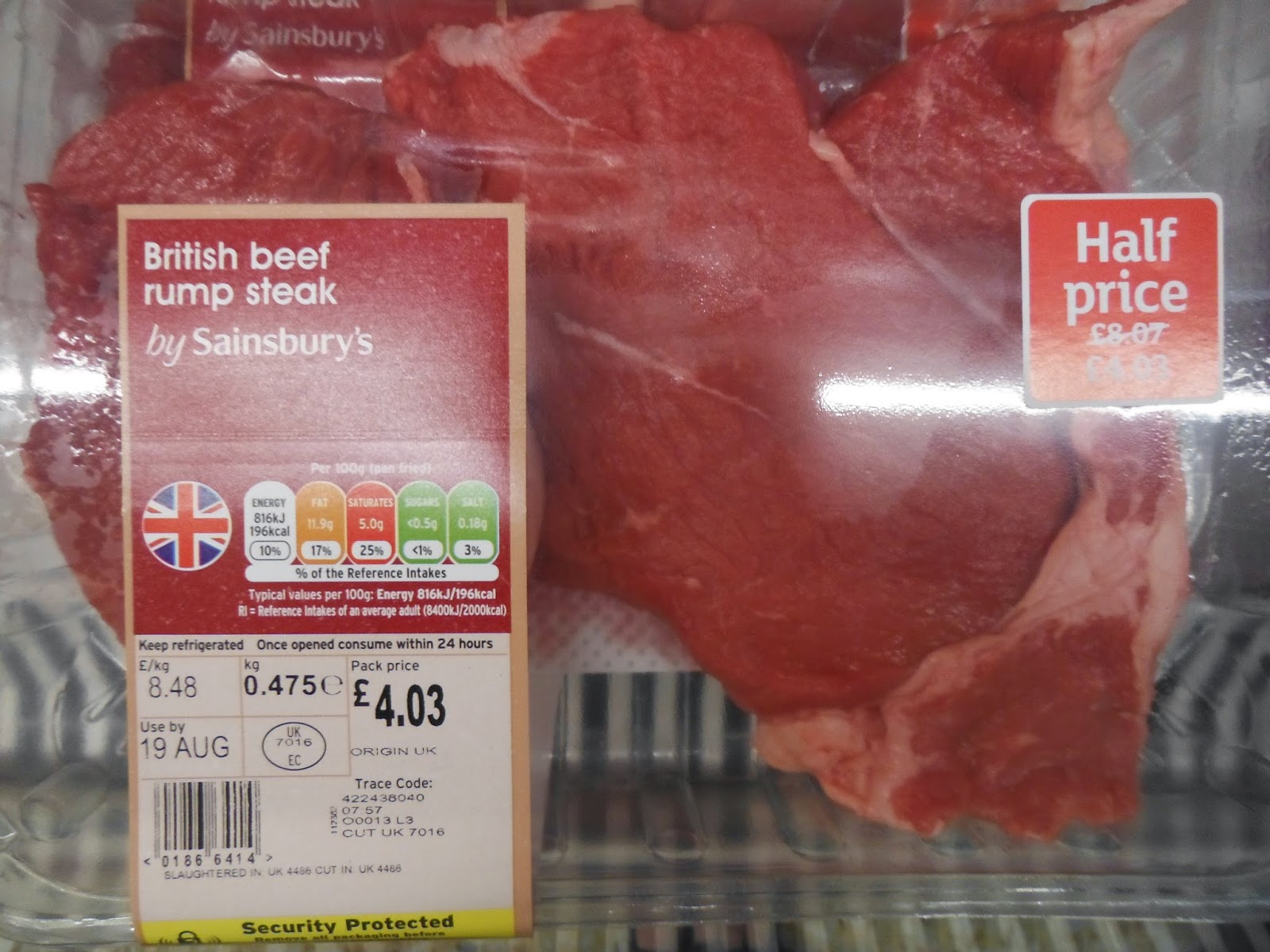
I first came across this in Australia when I had the opportunity to tour what we would consider in North America a mid-sized packing plant (which processes 200 head per day).  In Australia they have a similar Animal Health traceability system called NLIS and they use a Radio Frequency Identification (RFID) tag exactly as we do.  The beauty of the system happens after the animal is killed and the processing begins, the traceability stays with the animal throughout it’s journey through the plant and is continued all the way to the grocer’s shelf.  The NLIS system tracks the animal until the tag is removed, then the plant’s own internal system takes over; the data from the kill floor, the bone room and the packaging room all talk to each other and maintain the traceability component.  The plant is required by the Government to maintain this data for international marketing requirements and food safety.  Carcasses are tagged on each quarter with information including kill date, carcass weight, detention information, grade and an internal tracking number which is linked to the NLIS tag number.  A portion of this data is also transferred to the box label and travels with the product on the packaging to the retail outlet.  

I came across a very similar traceability system while touring a plant in the United Kingdom.  This specific plant was in Northern Ireland,was part of a large corporation with locations across the UK and processed between 400 - 500 cattle per day.  The United Kingdom ear tag system is a mandatory system that uses a double visual tag system with a 15 digit tag number printed on them.  Sheep are required to use Electronic Identification (EID) tags but cattle are not, so these plants have to manually type in the number of each animal that crosses their floor.  This particular company of plants uses a specialized in-house software system to track the data on the animals after the tags are removed, the tag number is again correlated to a kill number which is assigned by the plant.  This new number stays with the product until it is purchased, it is attached to each quarter with the same information used in Australia, it appears printed on the box label and finally on the consumer packaging during the final stage of fabrication.  The tracking and printing of this  information is required by the Government and “born in” and “raised in” data is required to be printed on all labels until the product is sold.  Even grind is fully traceable back to the animal and therefore the farm of origin.

Both of these visits were excellent examples of how traceability can go beyond the live animal and provide authentic, meaningful information to consumers.  While government regulated this in both cases, I was told repeatedly that the domestic and international customer had been the main driver for the implementation of the system.  It feeds into the reoccurring theme I witnessed in every country I have visited so far; that consumers want to know where the food comes from and they want to be assured that what they are eating is safe.  It really is a basic right to have access to that information.  Even us as producers, working in the industry want to know that information, which is a significant reason why we consume our own product.  

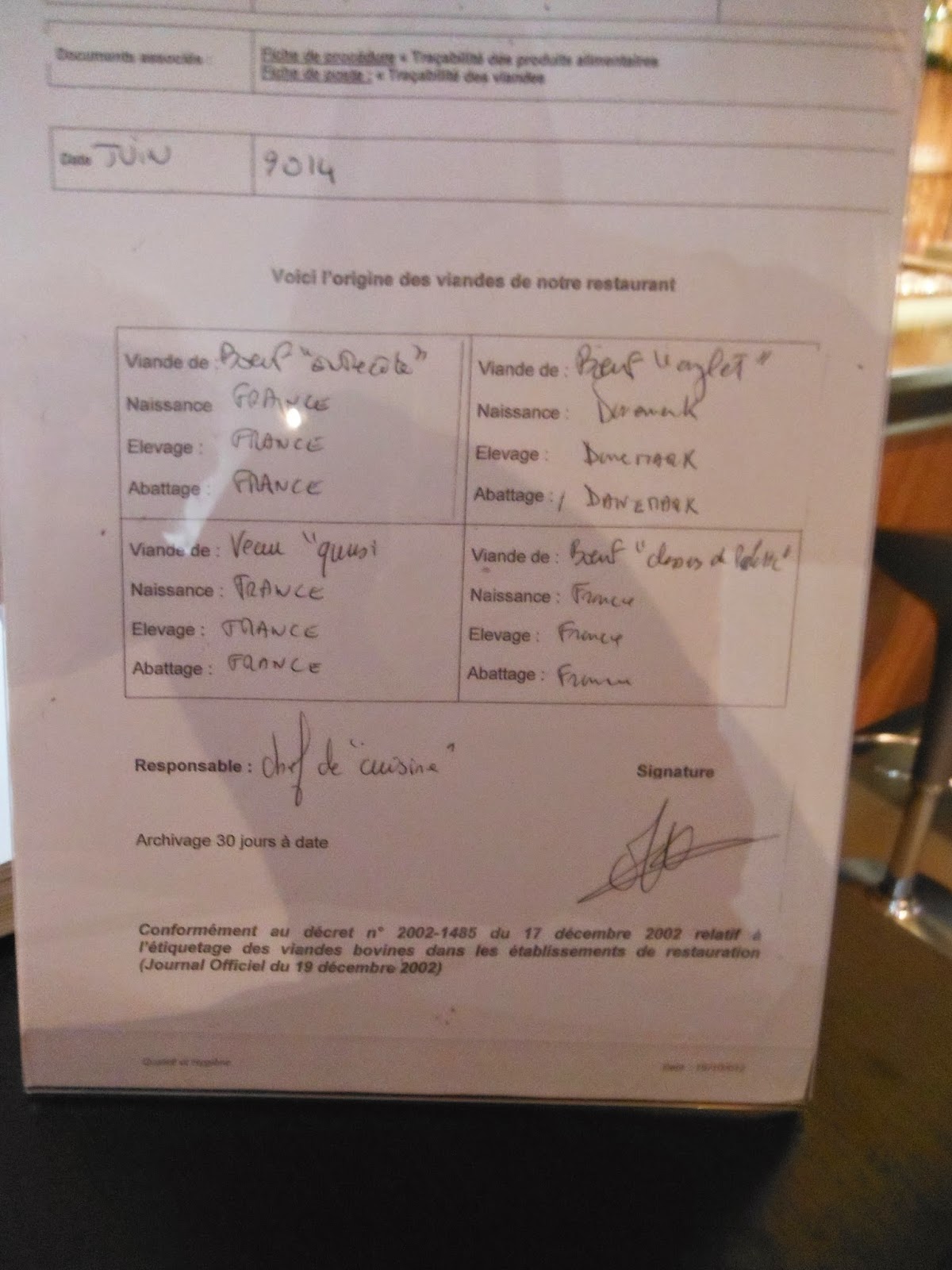
It really hit home for me while I was travelling in France.  At a hotel I was staying at near Borges, I came across a notation in the menu for the hotel restaurant.  The menu in the room said “Information regarding the origin of our meat is on display in the restaurant.”   Down in the restaurant there was a sign that had each cut of beef on the menu along with the born, raised and killed information, clearly accessible and available to any inquiring customers.  This is now required by law in all restaurants in France.  In this instance each cut was born, raised and killed in France but the sheet could easily be updated when the supply changed based on the information provided by the processing plant on the product packaging.

Over and over again, I found myself wondering if we are putting ourselves at a disadvantage by not voluntarily tracking this data, some will argue that our international customers are not requiring it yet and that is valid.  Others still will wince at the extra cost, the inability to keep up to the speed of commerce or the further imposition of government regulations.  If we know our competitions are providing this information and the customer wants more and information information as each year goes by, is it not better to voluntary begin the process instead of waiting until our export markets get closed or the government forces it upon us after a food safety scandal? 


I have also learned over the past year that no animal traceability system is perfect, each country I have visited has very interesting and unique ideas on how it should look and what is required by the producers.  Each country has producers who loathe their system and want for what someone else has.  The best we can do is work with what we have and learn from others.

Sunday, September 14, 2014

More photos from Europe

Big Ben, London, UK
Tower of London with WWI commemorative art installation

Hampton Court; Clock from King Henry VIII
Hampton Court Gardens, UK

Kitchen at Hampton Court

Drogheda, Ireland


IVERK Show, Piltown, Ireland

In front of the Louvre in the rain, Paris with a bus.


Vitre, France

Vitre, France architecture

Charolais Show, France

Bourges Cathedral, France

Deauville, France

Hotel in Deauville.

Monday, September 8, 2014

A Connection to Food Like No Other

In France especially but throughout Europe I find that consumers have a different relationship with food.  The savour it, take time to enjoy it and it has a much more regional basis to it.  I have not had a meal in France that was less than three courses.  The food and the regions have a notoriety to them.  That is ultimately one of the reasons why I am in France, to learn about European consumers one must visit the country that is know around the world for their fine cuisine.  I have found on this trip and others that I have taken to Europe that consumers want to eat food produced in the region they are living in or visiting.  A number of years ago I visited Belgium because why wouldn’t I want to go to a place that is internationally recognized for their beer, french fries and chocolate.  The regional pride in food in similar to Canadian’s loyalty to our team of choice.  

There is a pride in Normandy for example, that their food products; meat, cheese, caramel sauce in their opinion is the best.  They show off their products in restaurants and stores, competitions are held and ribbons and trophies are displayed in butcher shop windows and hung on the wall of the restaurants.  There is a loyalty to the traditions and an innovative spirit to work towards perfection.

I saw this in Northern Ireland as well with Food NI’s Taste of Ulster program.  This program publishes a list around 150 restaurants in Ulster each year that use a high proportion of locally sourced food products.  Annually, the establishments are inspected and audited to ensure they are of the highest standard and truly sourcing certain proportions of their products from Northern Ireland.  Taste of Ulster also works with farmers and suppliers to highlight their specific product and make the connections to the retail and food service providers when necessary.  

The Back British Farming campaign by the National Farmers Union (NFU) in the United Kingdom is doing something different yet similar.  They work to increase public awareness of what food is produced in the country and encourage consumers to ask for British produced products.  They are encouraging and maintaining the demand for locally produced food products.  They also have a verification program called Red Tractor Assurance to ensure the highest standards are used to maintain quality and confidence.


PGI (Protected Geographical Indicator) and PDO's (Protected Designation of Origin) are a big part of this. Since 1992, PGI's are a way to ensure that foods or food products originating in a certain region can only be labelled as such when produced within that geographic region.  Champagne is a perfect example; only grapes grown in the Champagne region of France can be labelled as such.  Products originating from a different region must be called Sparkling Wine.  This law allows producers of specific products to obtain a premium price for their authentic products and ensure that regional branding is maintained and that there is no opportunity for copycat products of possible inferior quality to enter the market place.  


In the end, all of these programs are about a brand.  Branding of agricultural products will be the key moving forward.  Historically the farming community as a whole has not been great at telling our story and a brand is largely about the story behind it.  This is starting to change and change is welcomed by those in the industry and by the consumers.  These three regions are prime examples of how it can be done successfully and can be tailored to individual needs.  The strong ties to specific regions in Europe means that it must be done at this level to have the most impact.  At home perhaps the best approach would be to have greater Canadian branding on products but I feel that an argument can be made that in the Maritimes there could be a regionally based program and be very successful with it.  Either way something needs to be researched, investigated and steps need to be taken to strengthen the relationship with our most important customers, those at home in Canada.  We are lucky to have great support from them especially in the meat industry and we need to ensure that they continually have the best Canadian products available to them. We also have the ability to showcase our beef, milk, cheese, bread etc to visitors and to the world.  Let’s make it easy for them to identify Canadian made and produced products so they can help us spread the word.  A strong brand at home will be crucial to having a strong brand internationally. 

Saturday, September 6, 2014

Traceability in the EU


While I don’t claim to understand the subtle differences in the traceability systems in each of the European Union countries nor did I have the time on this trip to dive in to get that much detail.  I have come away from this trip with a better understanding of the system as a whole and a good understanding of the Irish, UK and French methods.  
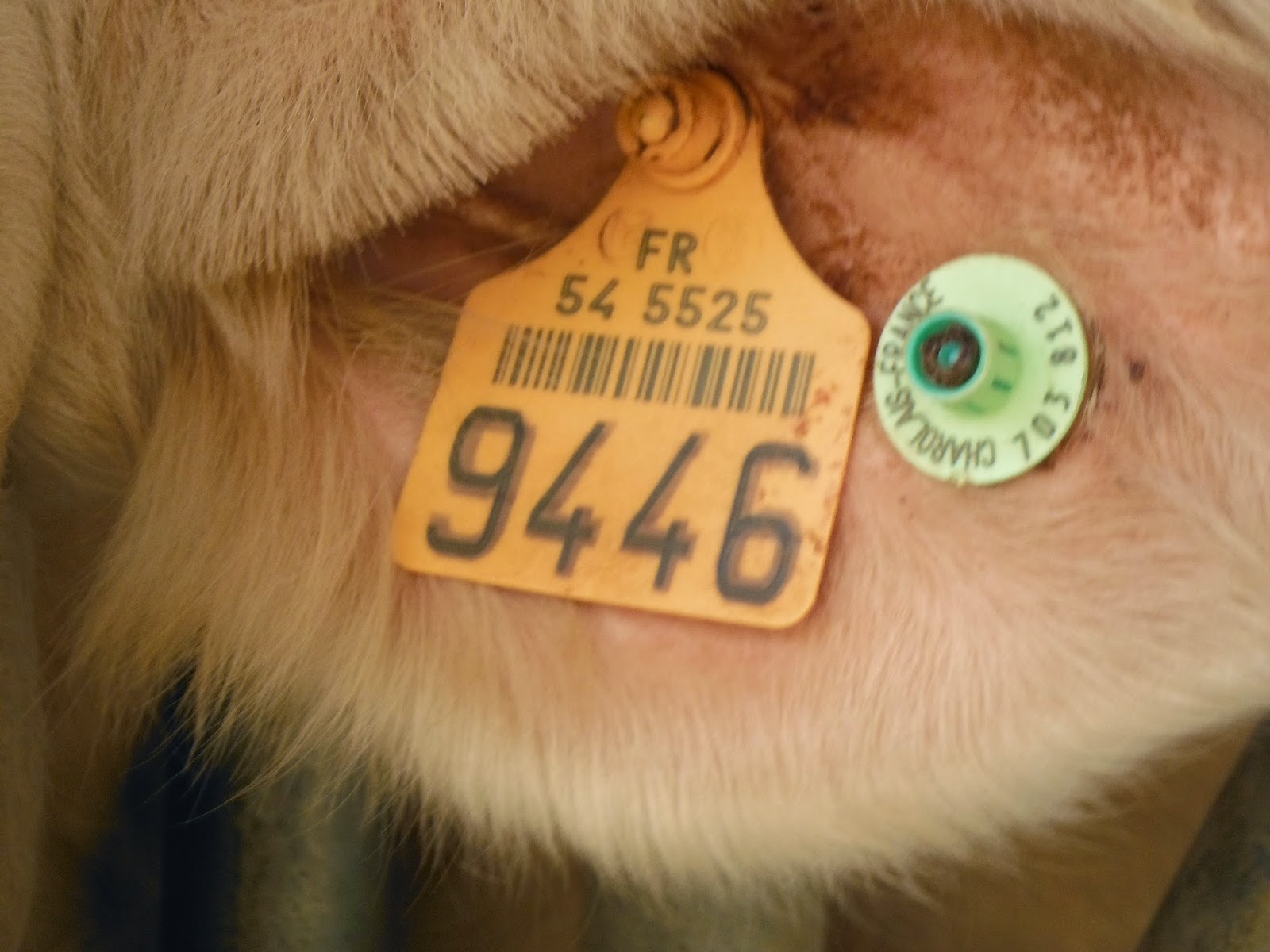
The ear tags are all similar, produced by Allflex and 2 tags in each animal are required.  The tags are individually numbered and includes a herd identification component.  Some countries use barcodes, electronic identification (EID) is not mandatory but is available to be used for on-farm management.  The places without barcoded tags or in the cases of the older cows in those areas, use pen and paper to keep records, the number has to be read and recorded by a person and then entered into the electronic system.  EID systems are coming but the exact date is yet to be determined.  A backgrounder that I spoke to is looking forward to that day so they can keep their own records electronically based on the EID number.  They would apply an EID tag now of their own but they can not justify the cost when they only have the cows on farm for something around 100 days.

The tags are produced by Allflex and most often in the production facility in Vitre, about 2 hours west of Paris by train.  Orders are submitted each day by the regional department of agriculture (for French producers) and tags are custom made for each producer or as a replacement tag when one is lost.  The system is efficient and has many checks and balances in place to ensure accuracy and quality in the products.  I was fascinated to see how the tags are actually manufactured from start to finish under one roof and the speed at which production happens.    

Each time an animal is sold and therefore moved from one operation to another it is recorded in the national database, either through a paper based passport system as in the United Kingdom or electronically as in Ireland.  The processor in Northern Ireland that I visited tells me that data entry errors and tags being listed as what we would call retired are seldom and if they occur the information is verified and the problem corrected before the animal is allowed to be processed.  The information stays with the carcass as it did in Australia and each quarter is tagged with all the animal information including producer, breed and country of origin data.  

All meat sold in the stores is labelled with country of origin information on them.  It clearly states where the animal was born, raised and processed.  In France, all restaurants are now required to have written country of origin information on beef cuts available to patrons.  In the case of the restaurant at the hotel in Bourges where we stayed,  there was a notation on the menu that the information was available so I went to find it and had no trouble.  They had it on paper in a stand near the entrance.

Required French National ID tag and Charolais Herd Book tag
In France registered Charolais animals are also required to have a tissue sample taken and they use a method which leaves a green tag in their ear.  In Ireland, all national tags are tissue sampling tags and their goal is to have DNA tissue samples on all animals registered and commercial on file.

Example of Country of Origin information from restaurant 
Producers seem to accept the system as it is,  the level of regulation is so high that perhaps it is just one more piece to that puzzle.  Beef operations for the most part are smaller holdings, cattle are handled often and if not sold to the feeding industry in Italy then are kept at home and finished by the cow/calf producer themselves.  Reading tags by hand isn’t a hassle.  The data management system is government run in each country and the interface for the producer or processor is quick and easy to use.  


No system in perfect and no two system can be exactly the same.  There were many positive things that I have seen in the European traceability system.  The databases are extensive and it will be interesting to see how the industry can use that data to improve going forward.  Sharing of information is also a key piece of the traceability puzzle and will become more important as traceability expands into other aspects beyond the live animal to increase transparency, marketing opportunities and food safety.  Hans Johr from Nestle said it well on Sunday “We should all work together to ensure there are no more food scandals.” 

Tuesday, September 2, 2014

Alltech Global 500 Beef & Dairy Conference, Deauville, France

When planning this trip to Europe as part of my Nuffield travels I actually built it around this conference being held in the Normandy region of France which brings together over 700 beef and dairy farmers from 42 countries.  My aim was to seek out new perspectives and to get a truly global perspective on beef production.  Conferences are efficient as they bring many people together in one location and I have an opportunity to talk to many of them, far more than I could if I was travelling around on my own.  As a company I wasn’t all that familiar with Alltech but I had heard about the conference a few years ago and caught part of it online last year so that was enough for me to make the trip and find out for myself.  Alltech is an American company based in Lexington, Kentucky that manufacturers and sells feed additives for ruminants.  They host this event annually and are present in countries around the world.  

The presentations were varied and included information on products available through Alltech and the technology behind them as well as outlooks and trends in a global context.  Surrounding the theme of “What if….” big questions were asked and the answers are complex and difficult but the discussion was good.  Labour shortages in agriculture, increasing efficiencies, traceability and sustainability were all topics covered during the two days.

Some interesting points I am taking home are:
  • Opportunities are often in worlds less travelled.
  • “You and I have a job thanks to consumers” Hans Johr, Nestle
  • It is always a good idea to invest in agriculture
  • Traceability will improve efficiency and innovation, decrease food waste and be necessary to sustain customer confidence.
For me the biggest feature was being in a group of farmers where I knew none of them.  Before leaving home, I expected to get here and run into someone I knew from home, the USA or by chance somewhere else but it did not happen.  It was refreshing.  I met many people from many countries, and met a few Canadians who live in the Calgary area as well.  

The town of Deauville, which hosted this event is beautiful.  The venue was right on the beach and the sun was shining.  The town had the old style wood buildings and is a popular vacation spot for well to do Parisians in the summer.  An American film festival is held every year in early September and the stars and stripes were already flying all around town.  


Over the past few days I have gathered plenty of material for my Nuffield project, gained knowledge and ideas that will be used at the office and had interesting conversations with a variety of people.  Another successful endeavour in my books.